
Urban Development · Atlantic seaboard
Coastal Gateway City Transformation Program
An integrated urban program template for Africa’s coastal gateway cities — the port metropolises that carry the bulk of a country’s trade — addressing mobility, drainage, waste, water, lighting and digital services as one coordinated system.
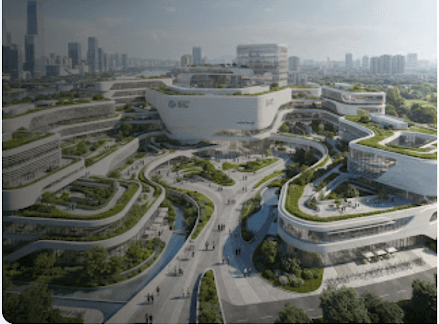 Concept Visualization
Executive Overview
An integrated urban program template for Africa’s coastal gateway cities — the port metropolises that carry the bulk of a country’s trade — addressing mobility, drainage, waste, water, lighting and digital services as one coordinated system. The program is at NBP-2 on the NBP readiness ladder and is recorded at concept confidence. Scope, cost and structure remain subject to the studies listed below.
Development Challenge
Africa’s coastal gateway cities combine rapid population growth with drainage and mobility constraints. Congestion raises logistics costs for the port economy, and seasonal flooding interrupts commerce and damages assets.
Strategic Rationale
Improve the productivity and liveability of the principal economic centre of a coastal African economy by treating urban systems as interdependent rather than as separate procurements.
Proposed Solution
A phased urban program sequencing drainage and flood resilience first, followed by mobility corridors, waste systems, public lighting and digital service delivery, with each phase justified by its own feasibility study.
Project Components
- Drainage and flood resilience works
- Priority mobility corridors
- Solid waste collection and recovery
- Water distribution improvement
- Public lighting
- Urban logistics management
- Digital municipal services
Location & Beneficiaries
Location: Atlantic seaboard, Africa
Residents of the gateway urban area, businesses dependent on the port corridor, and the municipal authorities responsible for urban services.
Technical Requirements
- Technical scope to be established through pre-feasibility study
- Design standards to follow applicable national and international codes
- Environmental and social screening prior to design finalisation
Enabling Infrastructure
- Electricity supply
- Drainage capacity
- Land availability
- Municipal institutional capacity
- Digital connectivity
Market Context
A coastal gateway city typically handles the majority of its country’s trade volume. Urban efficiency in such a city has measurable effects on national logistics costs, which strengthens the case for coordinated rather than piecemeal investment.
Implementation Structure
Delivery and ownership structure to be determined at commercial structuring (NBP-6). Options include public delivery, partnership structures and concession models, assessed against value for money and risk allocation.
Capital Requirements
Estimated CAPEX
Not yet established
Funding Secured
None
Source: NBP programme records
Funding Requirement
Under study
To be determined. Suitable capital categories will be assessed at NBP-6 and NBP-7 against the project’s risk profile and revenue characteristics.
Revenue & Sustainability Model
Revenue and sustainability model under development. Where user charges are not viable, availability-based or budget-funded models will be assessed.
Economic & Social Impact
Economic Impact
Under study
Employment Potential
Under study
Local Content
Under study
Environmental & Social Considerations
Classification: To be assigned following environmental and social screening.
Environmental assessment will be completed to the standard required by national regulation and applicable lender policy before any commitment is sought.
Social assessment will address land, livelihoods, resettlement risk, community consultation and equitable access to the resulting service.
Project Dependencies
Risk Register
Preparation risk — studies may alter scope materially
ModerateMitigation: Staged approval at each readiness gate
Funding risk — no capital is committed at this stage
HighMitigation: Early engagement with development finance institutions
Institutional coordination across multiple authorities
ModerateMitigation: Defined coordination protocol agreed before NBP-5
Implementation Roadmap
- 1Concept developmentCurrentScope, beneficiaries and components defined at concept level.
- 2Pre-feasibilityNextTechnical and commercial viability tested at order-of-magnitude level.
- 3FeasibilitySubsequentFull technical, financial, environmental and social case established.
- 4Structuring & financingSubsequentDelivery model settled and capital matched to the opportunity.
Related opportunities
Urban Development
Capital City Transformation Program
An urban program template for African capitals, addressing mobility, public space, water and administrative service delivery in topographically constrained administrative cities.
Urban Development
Continental Affordable Housing & Urban Regeneration Program
A program addressing affordable housing supply and the regeneration of existing urban areas, using local materials and efficient construction methods.